
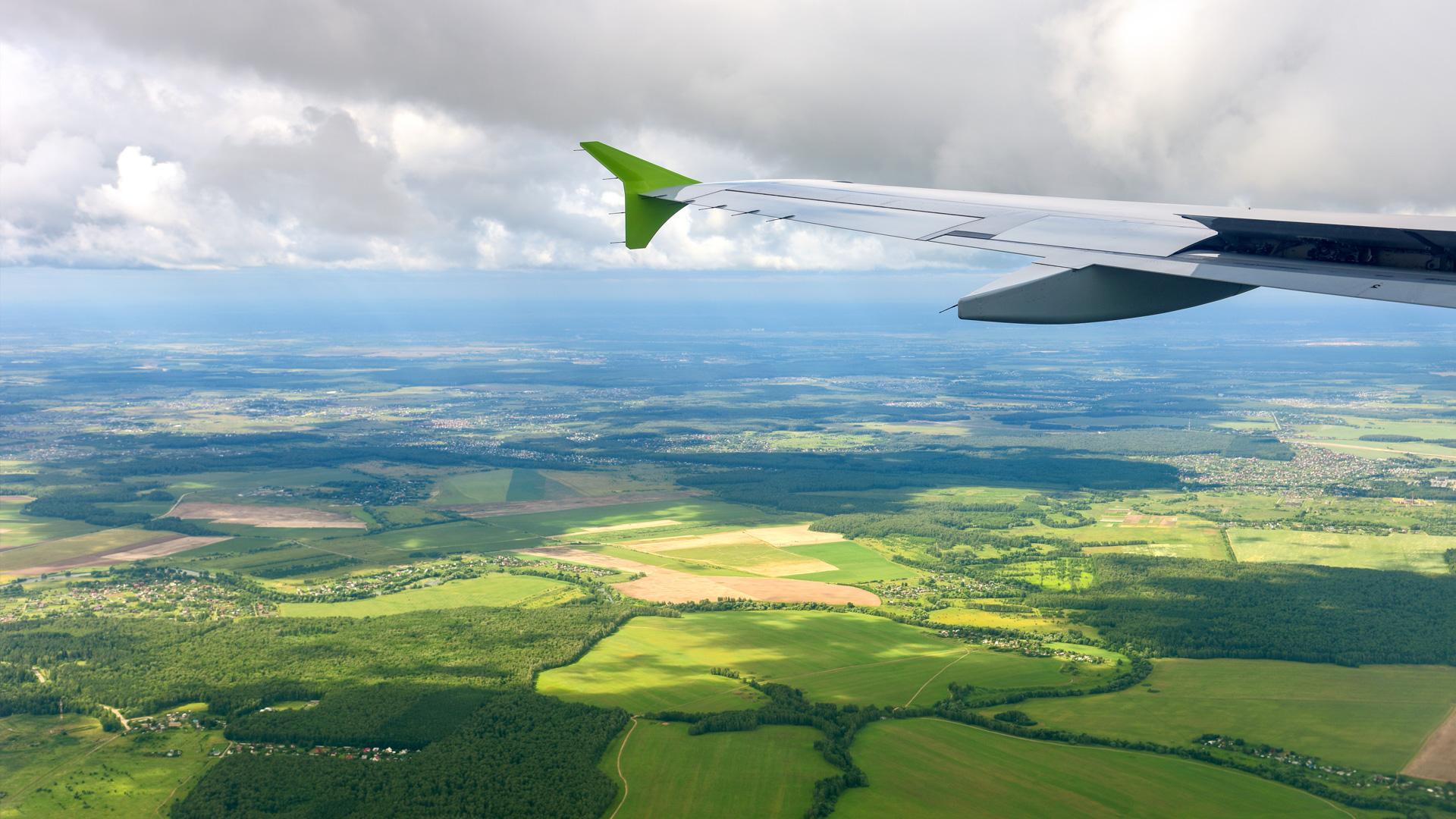
ustainability is no longer a mere buzzword but a major concern in the aviation sector. With the aviation industry making a considerable share of carbon emissions worldwide, the need to introduce more sustainable operations has never been greater. To aviation trainees, knowledge of these sustainable efforts is needed, not just to their future profession, but to be responsible contributors to an industry that is heading in a more sustainable direction. This blog explores the feasibility of the concept of sustainability in the aviation industry, outlining the major practices that contribute to change and their value.
Need for Sustainability in Aviation:
The aviation industry is two-fold: it provides connectivity and economic development across the world, but it is also a significant contributor to environmental issues. Aviation contributes approximately 2.5 per cent of the total carbon emissions in the world, contributing to climate change through its greenhouse gases (GHG), noise pollution, and other environmental impacts.
The necessity of sustainability is desperate, necessitated by a number of many factors:
Carbon Emissions Reduction: The aviation industry is a significant contributor of CO2. The key to minimizing this impact is sustainable practices such as the use of cleaner fuels and better aircraft efficiency.
Net-Zero Goals by 2050: Industry has set itself a target of achieving net-zero carbon emissions by 2050. To reach this ambitious goal, innovative practices and highly necessary in fuels, aircraft technology, and operations.
Regulatory Pressure and Corporate Responsibility: The world is witnessing governments that are enforcing more stringent sustainability rules. To achieve the latter, airlines need to be flexible to these to ensure that they are operating within the limits of the law as well as increasingly larger customer and investor demands.
Environmental and Social Impact: In addition to emissions, the aviation has impact on noise levels and ecosystems surrounding airports. Sustainability is a way of minimizing these effects.
To those trainees who are about to enter this dynamic industry, these drivers provide a preview of what the future of aviation is all about in terms of sustainability.

Need for Sustainability in Aviation
We choose the right person for the right role
Major Green Programmes Revolutionizing Aviation:
Aviation is becoming more multi-pronged in its approach to sustainability. Five initiatives that trainees need to be conversant with include:
Sustainable Aviation Fuels (SAF).
SAF leads the way in mitigating carbon footprint in aviation. Based on renewable sources such as plant oils, waste, and algae, SAF has the potential to reduce carbon emissions by up to 80 percent relative to the conventional jet fuel. Switching to SAF enables airlines to operate aircraft more cleaner without having to build new infrastructure. In spite of the increasing adoption of SAF, its availability and cost continue to be obstacles, which is why continuous innovation is crucial.
Aircraft powered by electricity or hydrogen.
In the future, electric and hydrogen propulsion are possible as alternatives to zero-emission flight. Electric planes are especially viable in short-haul flights with hydrogen-powered airplanes potentially transforming long-range flights. They are at the development stage but are a sign of a future where flying causes little or no carbon emissions.
Optimization of Flight Operations.
Efficiencies at the operational levels are important in sustainability. The trainees are expected to know such practices as improved flight planning, taxiing control to minimize fuel burn, and applying AI and machine learning to optimize routes and fuel consumption. An example is the shortening of taxi time at airports and data-based flight plans reduce emissions and operating expenses.
Ground Vehicles and Facilities electrification.
Sustainability is applied to airport operations. Installing ground services equipment, airport shuttle, and maintenance cars with electricity eliminates the use of fossil fuel-powered machines, which contributes to air pollution and carbon emissions in the area. Besides, airports are also investing in renewable energy such as solar and wind to sustain power facilities.
Carbon Offset and Environmental Reporting.
In addition to reducing the emissions, airlines take part in carbon offset programs, where they invest in initiatives like reforestation and renewable energy to offset the inevitable emissions. Sustainability reporting enhances trust and equips an airline with international standards.
The advantages of Going Green in Aviation.
Creating a sustainable approach to work has several positive outcomes, and the argument in favor of adopting such changes by aviation professionals is even more solid:
Reduced Carbon Footprint: Clean technologies and fuels also decrease the impact of the industry on the environment, which helps the world in combating climate change.
Cost Efficiency: Enhanced fuel efficiency and optimization of the operations will result in significant cost savings that will allow airlines optimisation in additional innovations.
Improved Brand Reputation: Sustainability is the word of the day among modern travelers, and it will appeal to more environmentally conscious passengers and increase loyalty.
Regulatory Compliance: Compliance with environmental requirements helps to avoid fines and facilitates the operations in the environment of global tightening policies.
Innovative Growth: Sustainability leads to technological growth, and new professional opportunities arise in green aviation.
Improved Employee Engagement: Employees feel better about working in environmentally responsible organizations and it increases morale and retention.
Long-Term Viability: Sustainability practices guarantee the sustainability and the relevance of the aviation sector in a climate-driven future.
What Aviation Trainees must pay attention to:
The following are some of the insights that can help trainees who wish to excel in the aviation industry to learn and develop a career within the field of sustainability:
Be aware of the Environmental Impact: Get to know the amount of carbon emissions, noise issues, and resource consumption linked to aviation activities.
Know greener technologies: Learn about SAF, flying electric and hydrogen, lightweight materials, and aerodynamics design improvements.
Professional Operational Sustainability: Learn how to use efficient flight planning, digitalize operations, and electrify ground vehicles.
Develop Industry Awareness: Learn the international regulations in net-zero emissions in aviation, and market-based policy like carbon offsetting.
Cultivate a Culture of Lifelong Learning: Sustainability is dynamic; one needs to stay informed of the latest processes and activities.
Promote Sustainability Culture: Encourage sustainable behaviour among colleagues and passengers, and it will make the aviation ecosystem greener.
Conclusion: Flying into a Sustainable Future.
Aviation sustainability is not something you want, it is something you need. With the industry tackling the environmental challenges with such innovative fuels, technologies and smarter operations, the aviation trainees should be equipped to be at the forefront of responding to these sustainable changes. Knowing the stakes in the environment, adopting the green technologies, and being willing to engage in lifelong learning, trainees will be able to help the aviation industry bridge the gap between connecting the world and protecting the planet.