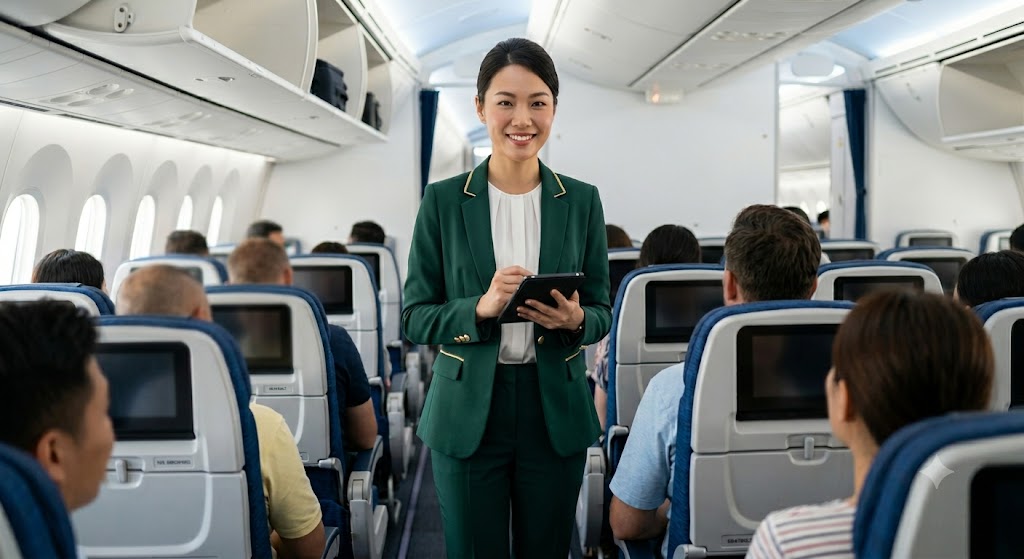
An individual who likes working with people, new experiences and who likes a high fast paced environment would be suited for this position. Flight attendant are very important in the aviation industry, they are responsible to keep the passengers safe and comfortable during their flight and make the flight a pleasant one for those interested in learning how to become a flight attendant.
It will be difficult, but enjoyable and rewarding for travel and professional development, but training, communication and confidence will be of paramount importance for its success. If you are thinking about getting into the job of flight attendant, you will learn about the qualifications, abilities, training and job prospects that are available to you , along with a clear understanding of how to become a flight attendant.
But what does a flight attendant do?
Flight Attendant or “Cabin” Crew are responsible for the safety of passengers and excellent service in flights. Not only do cabin crew members know how to prepare meals, and how to assist passengers, they know what to do in the event of an emergency and ensure that the safety measures of the aircraft are followed.
They have the following main duties:
- Ensuring the safety of the passengers on the aircraft during take-off, landing and while the aircraft is airborne.
- Demonstrating abilities in safe and emergency practices.
- Helping passengers to get into their seats, carrying bags and any other items they may require.
- Supplying food and beverages and other services on board of ships.
- Being calm and effective when reacting to emergencies.
- Improving the passengers’ comfort and comfort.
The qualities an air carrier would look for in their Airline Cabin Crew professionals in modern days of the aeronautics industry.
Here’s how to become a Flight Attendant.
The journey of a flight attendant is clear cut. The airlines are searching for candidates that fulfil the criteria, communicate well and are professional in the recruitment process.
The journey will take the following form in general:
- Meeting educational needs/ qualifications.
- Turning down the program before completion of the term.
- Improve communication skills, interpersonal skills.
- Successfully finished cabin crew professional training.
- Applying for employment at airlines.
- Taking part in interviews and assessment rounds.
Candidates’ readiness for a career in the aviation industry is achieved at the end of each level, providing a complete understanding of how to become a flight attendant.
Educational Qualification
Education is one of the pre-requisites in the Aviation industry. Most of the airlines ask their candidates to have passed in higher secondary (10+2).
The eligibility is:
- Having left 10+2.
- In some of the airline industry’s positions, graduation may be a good thing.
- Ability to communicate well in English.
- Basic knowledge and ability to provide customer service.
While grades are important, a well-developed communication skill, personality and professionalism are an important aspect of a good airline.
Essential Skills Required

To become a successful flight attendant, there’s more to it than technical skills. The companies hiring for the position are most interested in a person possessing a strong personality, confidence and communication skills with people of different ethnicities.
Important skills include:
- An optimistic attitude and self-assurance.
- Problem solving and quick thinking skills.
- Customer service orientation.
- Teamwork and adaptability.
- Good grooming and presentation skills.
The applicants who are good in communication and customer service don’t perform well in the hiring assessment as in the normal hiring process of the airlines.
Cabin Crew Training
Cabin crew training is a course of professional study which is aimed at imparting the knowledge related to the functioning of the airline and training them for the actual real-life situations. The training programmes are based on developing safety knowledge and customer service skills.
Training generally covers:
- Aviation Safety processes and regulations.
- Emergency/evacuation response skills.
- Basic medical aid and first aid.
- Adopting the right attitude and the right attitude.
- Communication skills (interpersonal and customer).
- Part 1 – Mock assessment sessions / interview preparation.
In this training, the candidate(s) become job ready and confident in airline interviews while gaining a clear understanding of how to become a flight attendant.
Airline Selection Process
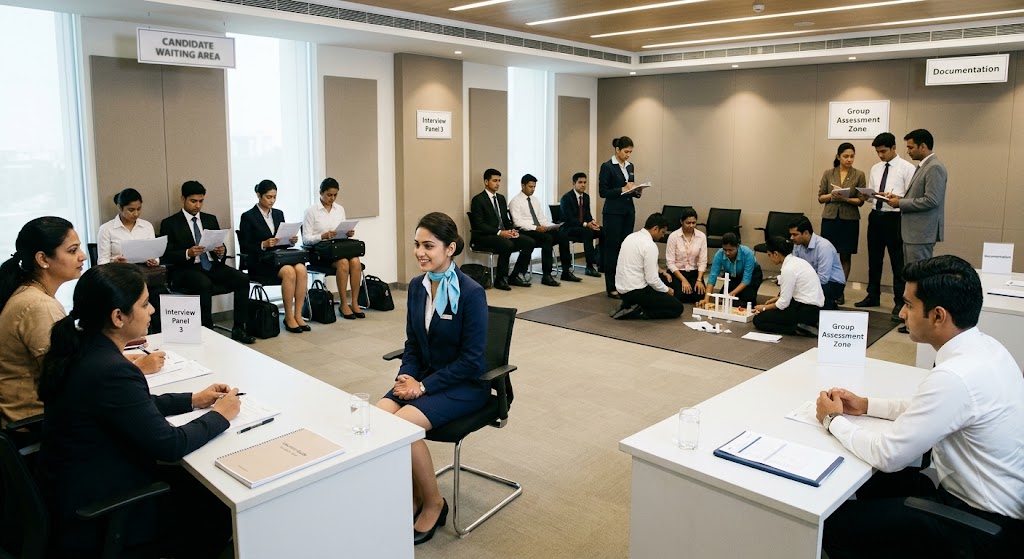
After successfully completing their training candidates will be able to apply for employment in domestic and international airlines. It is a competitive recruitment process, they evaluate communication skills, professionalism and personality.
There are several options for the selection process:
- Application screening.
- Group discussion rounds.
- Personal interviews.
- Evaluations for grooming and appearance.
- Medical fitness evaluations.
Firms are seeking employees that are knowledgeable in their branding, have excellent customer service skills, and are aware of safety measures.
Aviation Career Growth
There are a number of career opportunities within a flight attendant’s career. Cabin crew can also gain more experience to become cabin crew leader or cabin crew training in the aviation industry.
Typical career developments are:
- Junior Cabin Crew
- Flight Attendant
- Senior Flight Attendant
- Lead Cabin Crew
- Cabin Crew Trainer
- In-Flight Supervisor
Highly successful candidates who have relevant experience could also be offered jobs with foreign airlines and special jobs in the air industry.
Salary and Benefits
The pay of a flight attendant depends upon the airline, location, experience and the route. International flights and airlines will probably have better packages, as will long haul flights.
Average wages are:
- Freshers: ₹25,000 – ₹60,000 per month
- Experienced professionals: ₹80,000 – ₹2,00,000+ per month
Other premiums can be offered as:
- Free air fare or money-back to and from the trip destination.
- Accommodations for layovers at the hotel.
- Travel allowances.
- Reimbursements for health care and insurance.
- Exposure to other countries and localities.
The traveling and the people involved with the profession are many times as pleasant to some as the pay.
Final Thoughts
If you like to travel, interact with people and work in a fast-paced environment, then you might consider a career as a how to become a flight attendant . With the proper training, skills and education, the aspiring candidates can make a bright career in the aviation industry.
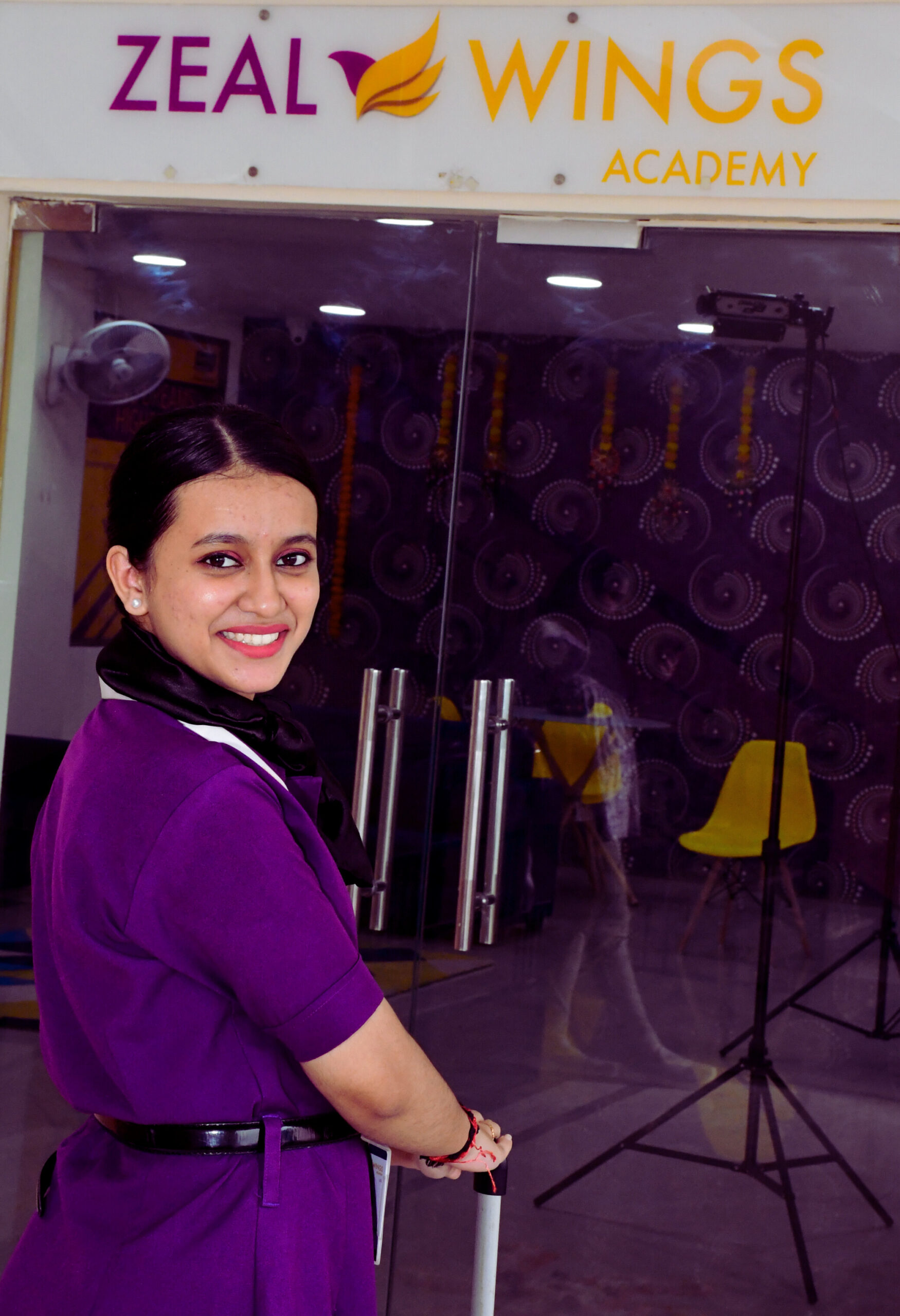
In schools like Zealwings Aviation Academy, students learn the knowledge, confidence and the skills required for a successful career in the position of Cabin Crew.
FAQs
1. What educational attainment is needed to be a flight attendant?
Most airlines will have a recognised board with which to get 10 + 2. Graduation is optional, but will add some value to your profile and additional opportunities.
2. Is it necessary for me to attend training to how to become flight attendant ?
Yes, it is strongly recommended to do cabin crew training. Candidates will be trained to learn about the Aviation Safety procedure, Customer service skills, Grooming Standards and Interviewing skills required for the airlines.
3. What is the lowest age someone can be to be a flight attendant?
The preferred age for the airlines’ cabin crew is 18 to 26 years. Other criteria, such as age, may differ, depending on the airline’s and recruitment policy.
4. May I work as a How to become flight attendant with glasses?
Yes, there are plenty of airlines that will accept vision correctors. Must have a valid airline medical and vision certificate (which can differ from airline to airline).
5. But, is this a good career as a flight attendant?
Yes, it can be a rewarding career for those that enjoy travelling and speaking to customers. It provides employment promotion, competitive salary, and foreign employment opportunities.